


EXPORT PALLETS
Corrugated Pallets for International Shipping
Simplify export shipping without ISPM-15 treatment and marking.
Corrugated pallets provide a practical, reliable alternative to wood pallets for global shipping. They are exempt from ISPM-15, which means no heat treatment, no fumigation, no stamping requirements, or associated pallet-compliance paperwork.
This helps simplify your export process, reduce delays at the border, and keep your supply chain moving.
What Is ISPM-15?
ISPM-15 is an international standard developed by the International Plant Protection Convention (IPPC) to reduce the risk of spreading invasive pests through wood packaging materials. It regulates wood pallets, crates, dunnage and other solid wood materials used in international trade.
The standard requires that qualifying wood packaging be heat treated or fumigated and clearly marked with an official ISPM-15 stamp. Many countries enforce this requirement, and shipments with non-compliant wood packaging can be delayed, retreated or even rejected at the border.
Exporters often encounter ISPM-15 because it is widely adopted and actively enforced. The goal is to prevent pests from moving between countries and protect local ecosystems, agriculture and forests.
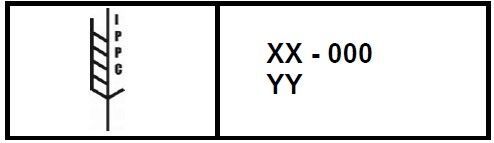
The ISPM 15 treatment certification stamp has several different forms but all contain the same information: The IPPC “Wheat Stamp”, country of origin (xx), facility code (000), and type of treatment (YY). (In the United States, the third-party inspection agency is also included).
Why Corrugated Pallets Are Exempt
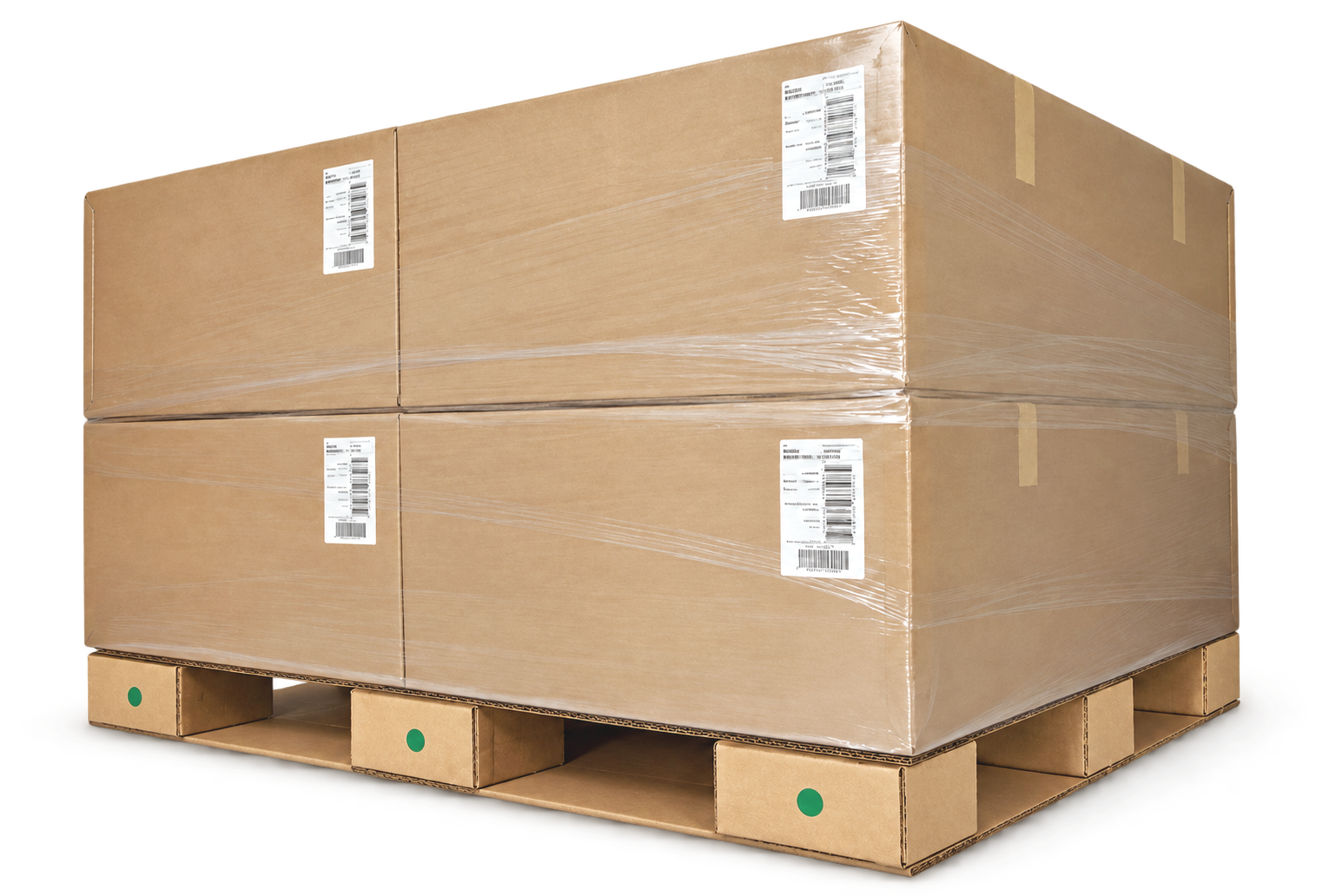
ISPM-15 only applies to solid wood packaging materials because they can harbor invasive pests. Corrugated pallets are made from engineered paper products, not solid wood, so they do not fall under ISPM-15 regulations.
This means corrugated pallets can be used for international shipping without heat treatment, fumigation or an ISPM-15 stamp. You can ship the same pallet design across domestic and international markets, which helps streamline your packaging process and reduce complexity.
Fewer Export Compliance Details to Manage
Using treated wood packaging does not end with simply buying a pallet.
The wood packaging must be properly treated, correctly marked, and acceptable under the requirements of the destination country. Exporters, freight forwarders, and receiving authorities may also need to verify supporting shipment or treatment information depending on the destination and circumstances.
If the wood packaging is improperly marked, cannot be verified, or otherwise fails to meet the importing country's requirements, the consequences can be significant. A shipment may be delayed, refused entry, re-exported, or require corrective action before it can continue.
Corrugated pallets remove that particular wood-packaging compliance issue.
Because the corrugated pallet itself is exempt from ISPM-15 treatment and marking requirements, there is no heat-treatment status or ISPM-15 mark on the pallet that must be verified before shipment.
For companies shipping internationally on a regular basis, that can mean fewer compliance details to manage and one less potential issue at the destination.
One Pallet for Domestic and International Shipments
Using a corrugated pallet for both domestic and international shipments helps simplify your supply chain. Instead of managing multiple pallet types and processes, you can standardize on one solution.
Simplify purchasing and inventory management
Use the same pallet design for all markets
Reduce handling and training requirements
Eliminate ISPM-15 treatment and stamping
Keep your supply chain consistent and efficient
Traditional
Approach
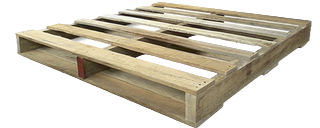
Domestic Shipments
(Standard Wood Pallet)
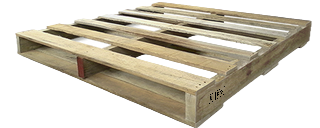
International Shipments
(Heat-TreatED & Stamped)
SIMPLIFIED
Approach
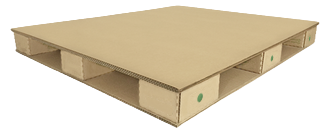
ONE CORRUGATED PALLET FOR ALL SHIPMENTS
Designed for the Destination, Not Just the Load
Corrugated pallets are engineered to perform in real-world shipping and handling conditions. They are designed with substantial strength beyond the static weight of your product to account for dynamic loads, handling forces and environmental factors. During transit, pallets experience vibration, impacts, compression and uneven loading. Humidity and temperature changes can also affect performance, especially in overseas shipments.
Our corrugated pallets are designed and tested to handle these conditions, so your product arrives safely.
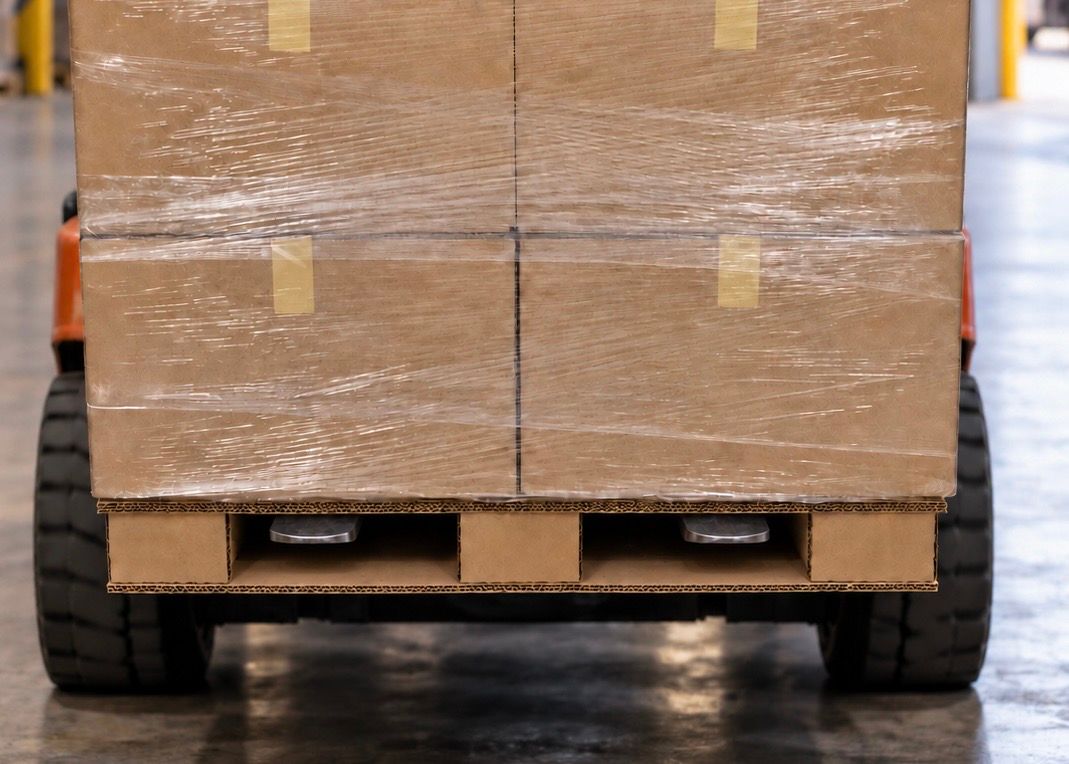
Ecodek Corrugated Pallets for Domestic and International Shipping
GreenLabel Packaging’s Ecodek corrugated pallets are designed around the product, load, handling requirements, and shipping environment. The same pallet design can be used for both domestic and international shipments without the ISPM-15 treatment, marking, and added cost associated with preparing wood pallets for export.
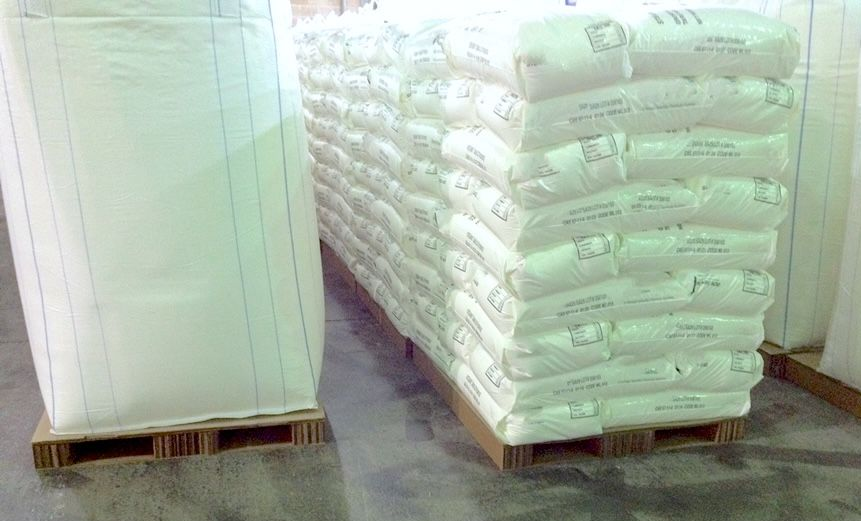
Domestic & International Application
This pallet program is used for both domestic and international shipments and for an application where wood pallets cannot be used.
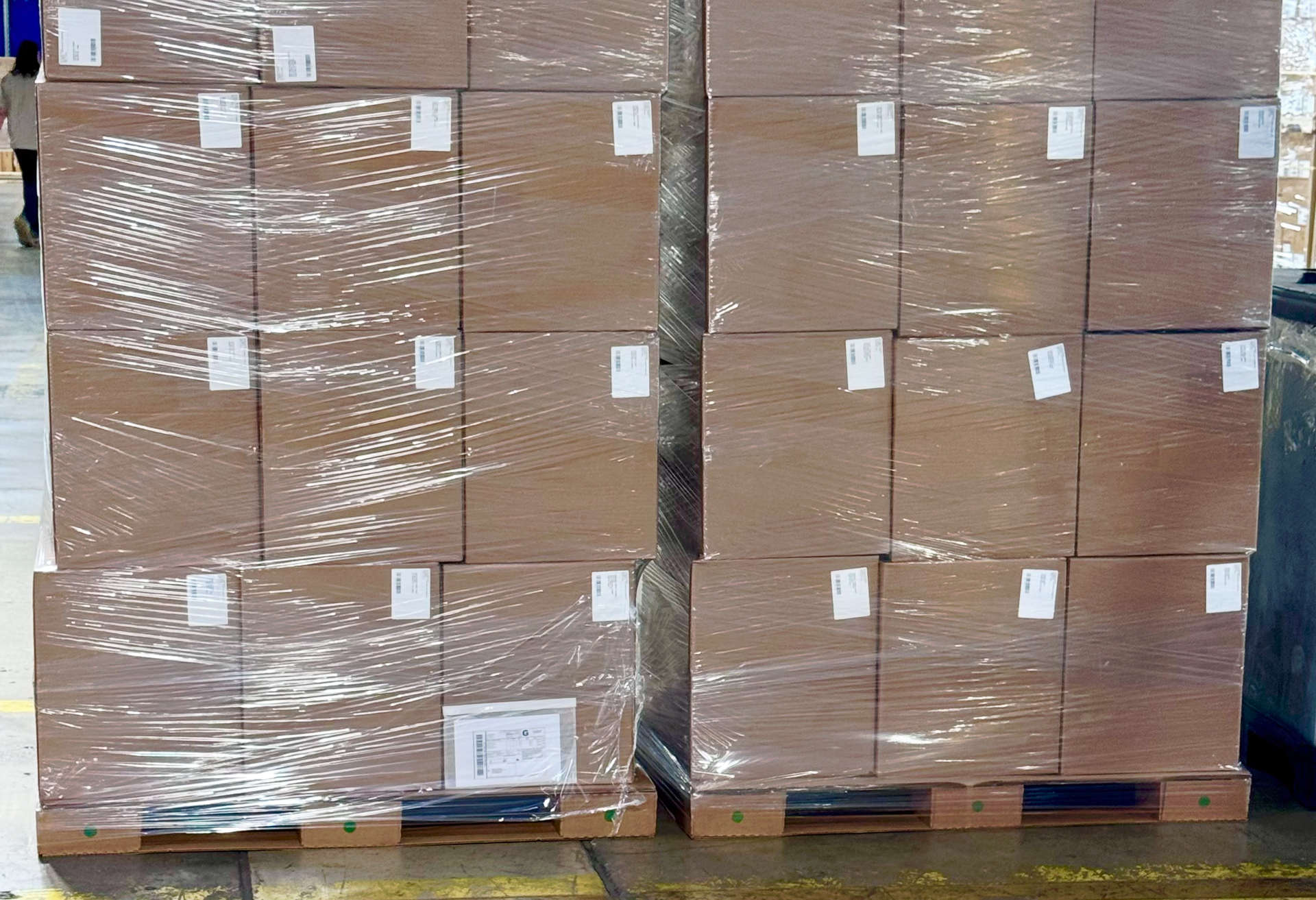
Corrugated Pallet Application
A production corrugated pallet designed for the customer's load and handling requirements. Because the pallet is paper-based, the same design is suitable for international shipping without ISPM-15 treatment or marking.
Frequently Asked Questions
ISMP 15 & Corrugated Pallet FAQ
Are corrugated pallets exempt from ISPM-15?
Yes. Corrugated pallets are paper-based and are not regulated as raw wood packaging material under ISPM-15. The corrugated pallet itself does not require ISPM-15 treatment or marking.
Do corrugated pallets need to be heat treated for international shipping?
No. Heat treatment is used to bring regulated wood packaging material into compliance with ISPM-15. Because corrugated pallets are paper-based, they do not require heat treatment for international shipping.
Do corrugated pallets need to be fumigated?
No. Corrugated pallets do not require fumigation under ISPM-15.
Do corrugated pallets need an ISPM-15 stamp?
No. The ISPM-15 mark is used on regulated wood packaging material that has received an approved treatment. Corrugated pallets are exempt from those treatment and marking requirements.
Can corrugated pallets be used for international shipping?
Yes. Corrugated pallets are used for international shipments and can be a practical alternative to treated wood pallets when the application is appropriate.
As with any pallet, the design must be suitable for the product weight, load distribution, handling method, stacking requirements, and shipping environment.
Are corrugated pallets considered wood packaging material?
No. Corrugated pallets are paper-based packaging, not raw wood packaging material.
That distinction is why the pallet itself is not subject to the ISPM-15 treatment and marking requirements that apply to regulated wood packaging.
What is ISPM-15?
ISPM-15 is an international standard intended to reduce the spread of plant pests through wood packaging material used in international trade.
It commonly applies to items such as wood pallets, crates, dunnage, and other packaging made from regulated raw wood.
Why do wood pallets need ISPM-15 treatment?
Raw wood can harbor insects and other plant pests. International movement of untreated wood packaging can introduce those pests into new regions.
ISPM-15 requires approved treatment methods and marking to reduce that risk.
What does the ISPM-15 stamp mean?
The ISPM-15 mark identifies regulated wood packaging material that has been treated in accordance with the standard.
The mark is relevant because the packaging is made from regulated wood. Corrugated pallets do not need the mark because they are not regulated as raw wood packaging material.
Is every export pallet required to have an ISPM-15 stamp?
No.
The requirement applies to regulated wood packaging material, not to every type of pallet used for international shipping.
A corrugated pallet can be used for export without an ISPM-15 treatment stamp because the pallet itself is exempt from those requirements.
Can I use the same corrugated pallet for domestic and international shipments?
Often, yes.
If the pallet is properly designed for the product and distribution environment, the same corrugated pallet specification can potentially be used for both domestic and international shipments.
That can simplify purchasing, pallet inventory, packaging instructions, and shipping procedures.
Are corrugated pallets strong enough for overseas shipping?
They can be, when they are properly designed for the application.
A corrugated pallet should not be designed only to support the static weight of the product. It also needs sufficient strength to handle the dynamic forces created by forklifts, acceleration, braking, vibration, stacking, and other conditions during transportation and handling.
GreenLabel Packaging designs the pallet with performance margin beyond the product’s simple static weight.
Do corrugated pallets have a standard weight rating?
Not in a meaningful one-size-fits-all sense.
Pallet performance depends on factors such as pallet dimensions, product weight, load distribution, support points, stacking conditions, handling equipment, and the shipping environment.
For that reason, GreenLabel Packaging designs corrugated pallets around the actual application rather than assigning one generic weight capacity to every pallet.
How does humidity affect corrugated pallets during ocean shipping?
Humidity is an important design consideration because elevated moisture levels can affect corrugated material strength.
GreenLabel Packaging takes the expected shipping environment into account when designing pallets for international use. The pallet is built with enough strength and performance margin for the anticipated handling and environmental conditions.
What if the pallet gets wet inside an overseas shipping container?
Corrugated pallets are not waterproof.
Normal humidity changes during ocean transportation are different from direct water exposure. If water is entering a shipping container and soaking the pallet and cargo, the shipment has a larger water-intrusion problem that affects more than the pallet itself.
The pallet should be designed for the expected shipping environment, including normal humidity conditions, but not for uncontrolled flooding or prolonged direct water exposure.
Does using a corrugated pallet eliminate all export documentation?
No. Export shipments can still require commercial, customs, product, and destination-specific documentation.
The advantage is narrower and more specific: the corrugated pallet itself does not require the ISPM-15 treatment and marking compliance associated with regulated wood packaging material.
What happens if wood packaging does not meet ISPM-15 requirements?
Noncompliant wood packaging can create serious problems at the destination, including delays, rejection, re-export, or required corrective action.
Using a corrugated pallet removes that particular wood-packaging compliance issue from the pallet itself.
Are corrugated pallets right for every export shipment?
No.
The right pallet depends on the product, weight, load distribution, dimensions, handling equipment, stacking requirements, storage conditions, and transportation environment.
Corrugated pallets can be an excellent export solution, but they should be designed around the actual application rather than selected solely because they are exempt from ISPM-15.
Ready to Simplify Export Shipping?
Tell us what you’re shipping and we’ll design a corrugated pallet built around your product, your operation, and the way it moves.