
Corrugated Pallet Design & Construction
Built around the product, load, and handling requirements.
Ecodek pallets can be configured with different deck constructions, support patterns, fork-entry arrangements, bottom designs, and material grades based on the application.
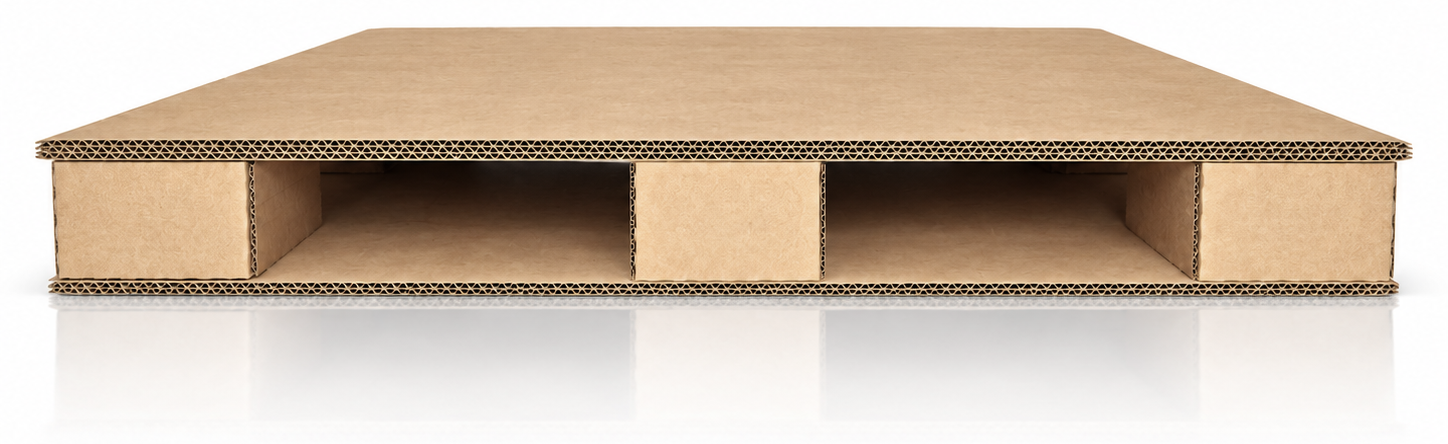
A Pallet Is a Structural System
An Ecodek corrugated pallet is more than a top deck supported by blocks or runners. The deck, supports, bottom construction, corrugated material, and adhesive system all work together to carry the load and transfer weight through the pallet.
Changing one part of the pallet can change how the entire structure performs.
A pallet supporting a broad, evenly distributed load may be built very differently from one carrying machinery, drums, bulk containers, or other products that place significant weight in concentrated areas.
That is why Ecodek pallets are designed around the application rather than around one standard construction.
Not All Corrugated Pallets Are Built the Same
Two corrugated pallets can have the same outside dimensions and still be built very differently.
Material grade, deck construction, support placement, bottom configuration, and even the adhesive system can make a major difference in how the pallet performs.
The strength and performance of an Ecodek pallet come from how it's constructed - not just the material. Construction method, adhesive type, and component design all play a role in creating a pallet that can handle real-world demands.
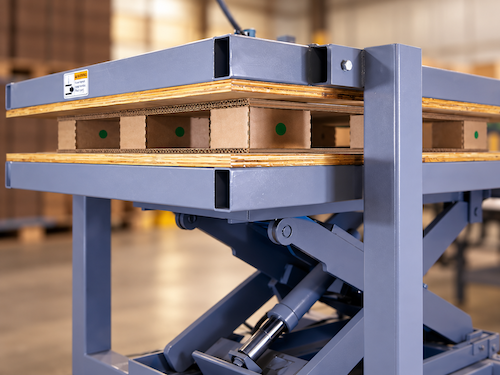
Bonded Under
High Compression
Ecodek pallets are manufactured using a water-based PVA adhesive that penetrates the corrugated fibers. The components are bonded under high compression, creating a strong, consistent bond across the entire surface.
This is different from hot-melt adhesive, which can create point bonds and lead to weaker, less consistent performance.
How Corrugated Pallet Construction Changes
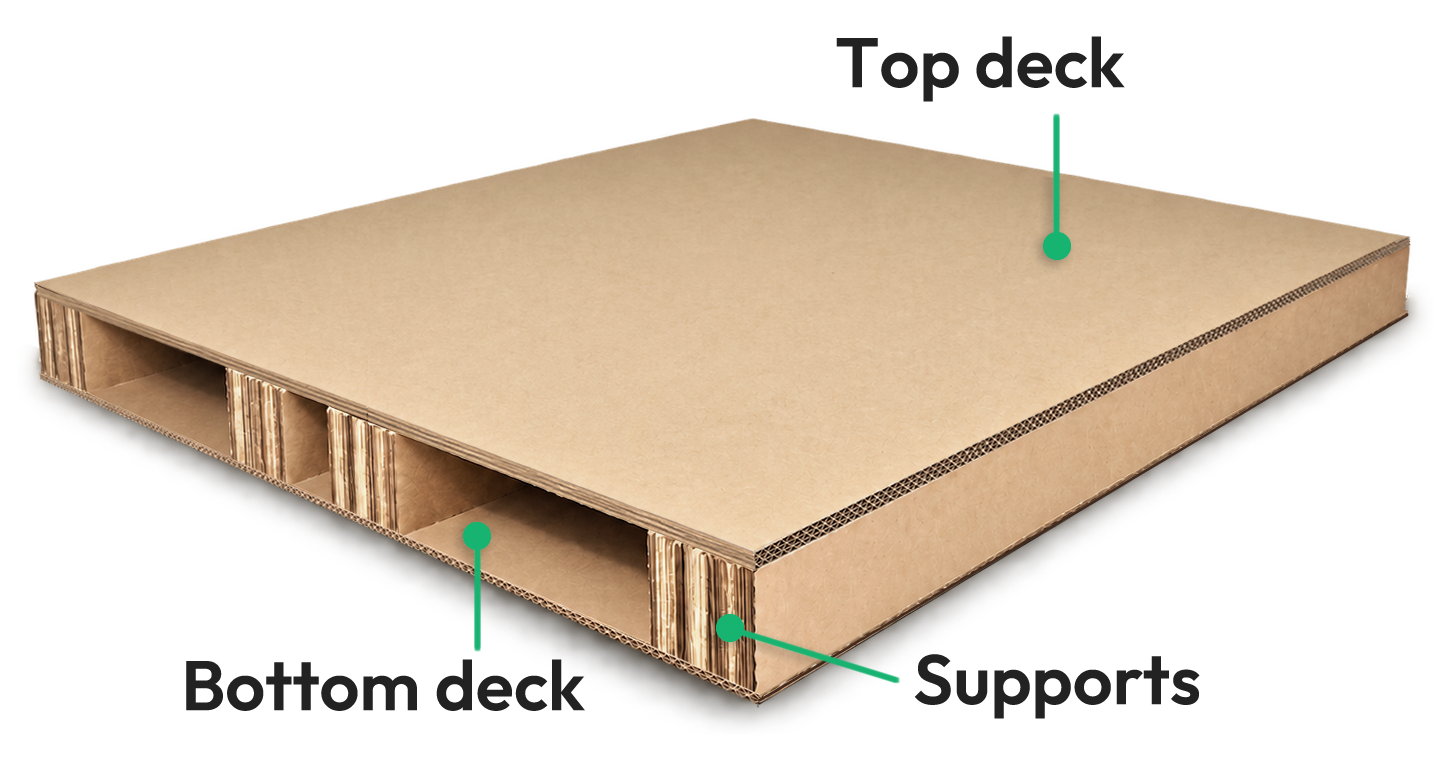
Ecodek pallets can be configured in many different ways to match your specific application. Key design elements include:
Dimensions
Length, width, and overall height can be tailored to your product and supply chain.
TOP DECK
Single or multiple deck designs based on load requirements and surface needs.
blocks & runners
Various support patterns including blocks or runners to match strength and handling requirements.
fork entry
Configured for two-way or four-way entry based on your equipment and workflow.
BOTTOM DECK
Optional bottom designs help optimize strength, handling, and cost for your application.
Technical Design Details
The details below show how an Ecodek pallet can be configured around the product and the way it moves through the supply chain.
Explore the technical details below.
Click any section to expand and learn more about Ecodek pallet design and construction.
Corrugated Material Selection ▾
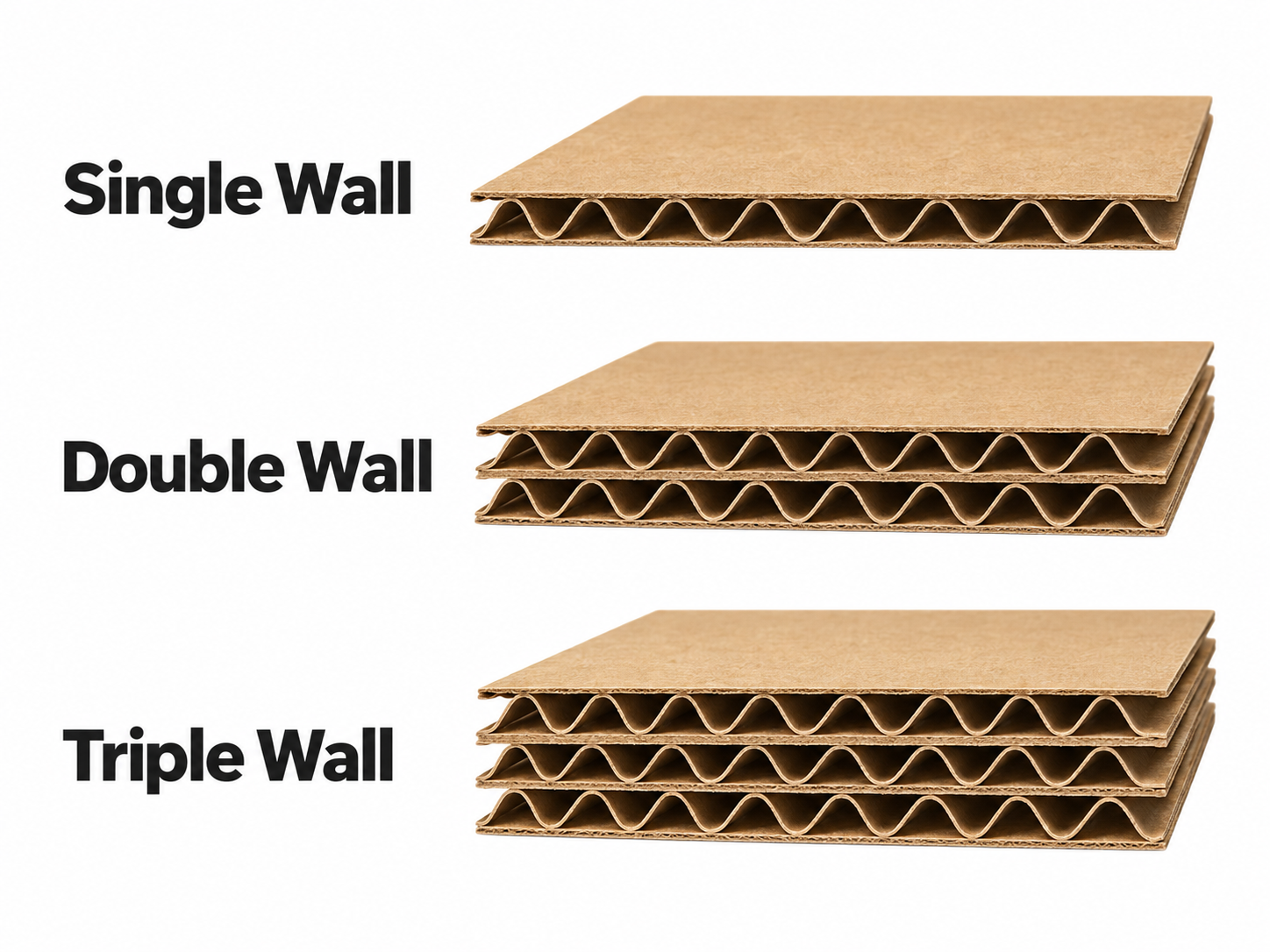
Ecodek pallets can use different corrugated constructions and material grades depending on the application.
GreenLabel works with heavy-duty corrugated materials including single-wall, double-wall, and triple-wall constructions.
Material selection can be influenced by:
- total load
- concentrated loads
- unsupported spans
- deck stiffness
- pallet dimensions
- handling requirements
- overall pallet construction
Heavier material is not automatically better.
Simply increasing board grade without considering the rest of the pallet may add material without solving the actual structural requirement. The deck, supports, bottom construction, and material grade need to work together.
Open-Bottom Pallet Designs ▾
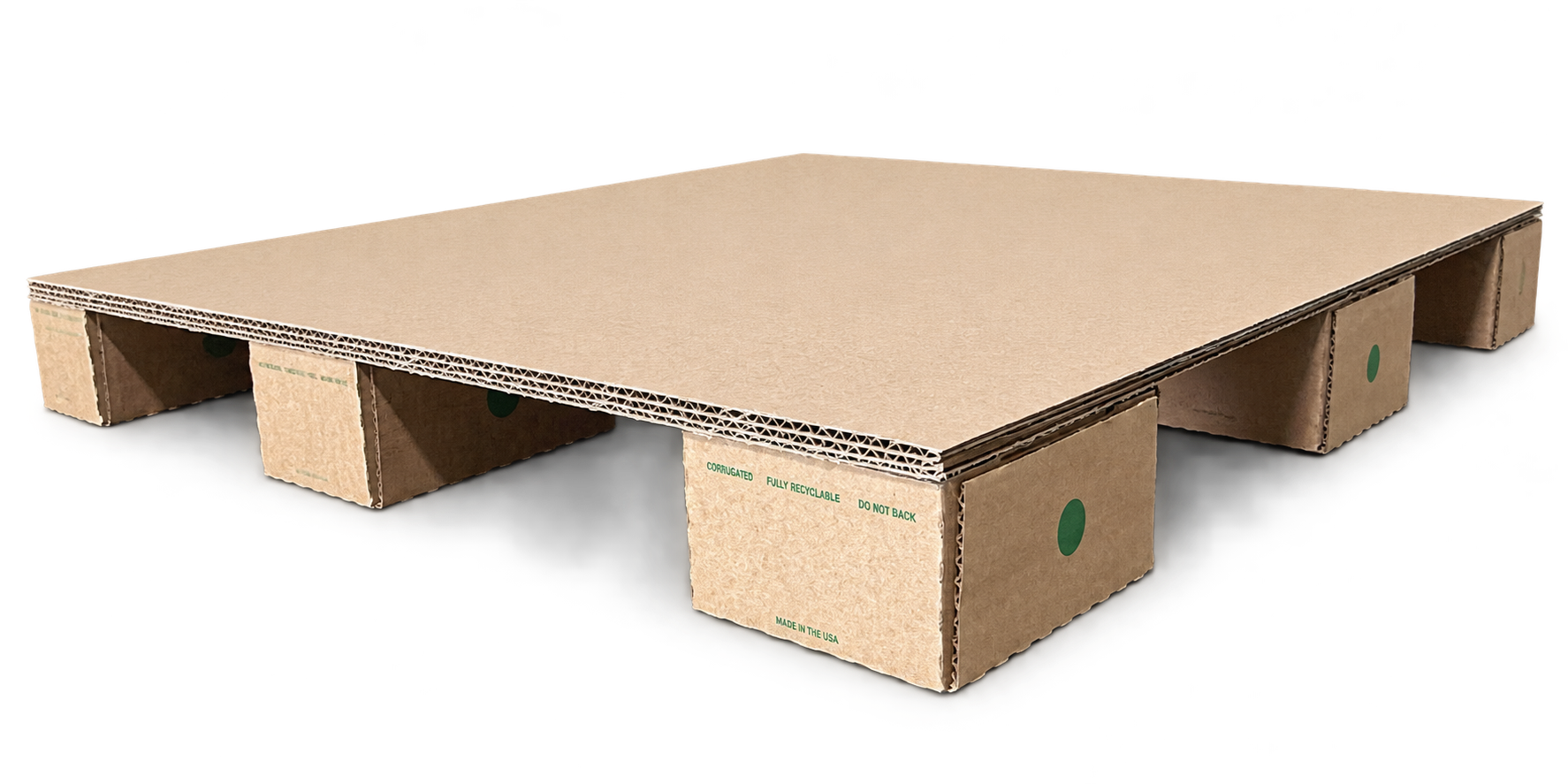
One of GreenLabel’s most successful corrugated pallet configurations is an open-bottom design.
Instead of using a continuous bottom deck, the pallet relies on the large surface area provided by its blocks. A typical nine-block pallet using 6 × 8-inch blocks provides approximately three square feet of total block-to-deck bonding area and the same three square feet of bearing surface beneath the pallet.
Combined with Ecodek’s PVA adhesive and high-compression bonding process, that provides a substantial structural connection to the top deck while also giving the pallet ample surface area to distribute its load onto the floor or the surface beneath it.
The open-bottom design can provide several advantages:
- lower material cost
- less pallet weight
- excellent access for pallet-jack load wheels when the pallet dimensions allow it
- simpler bottom construction
- the ability to nest pallets for shipment and storage
Nesting Open-Bottom Pallets
Open-bottom Ecodek pallets can often be nested by alternating pallets upright and upside down within the stack. Because the blocks fit into the open spaces of the adjacent pallet, the stack becomes much more compact.
For common pallet sizes, nesting can increase the number of pallets shipped per truck by more than 40%, depending on the design and trailer configuration. That can significantly reduce inbound freight cost while also requiring less storage space at the customer’s facility.
Pallet-Jack Accessible Designs ▾
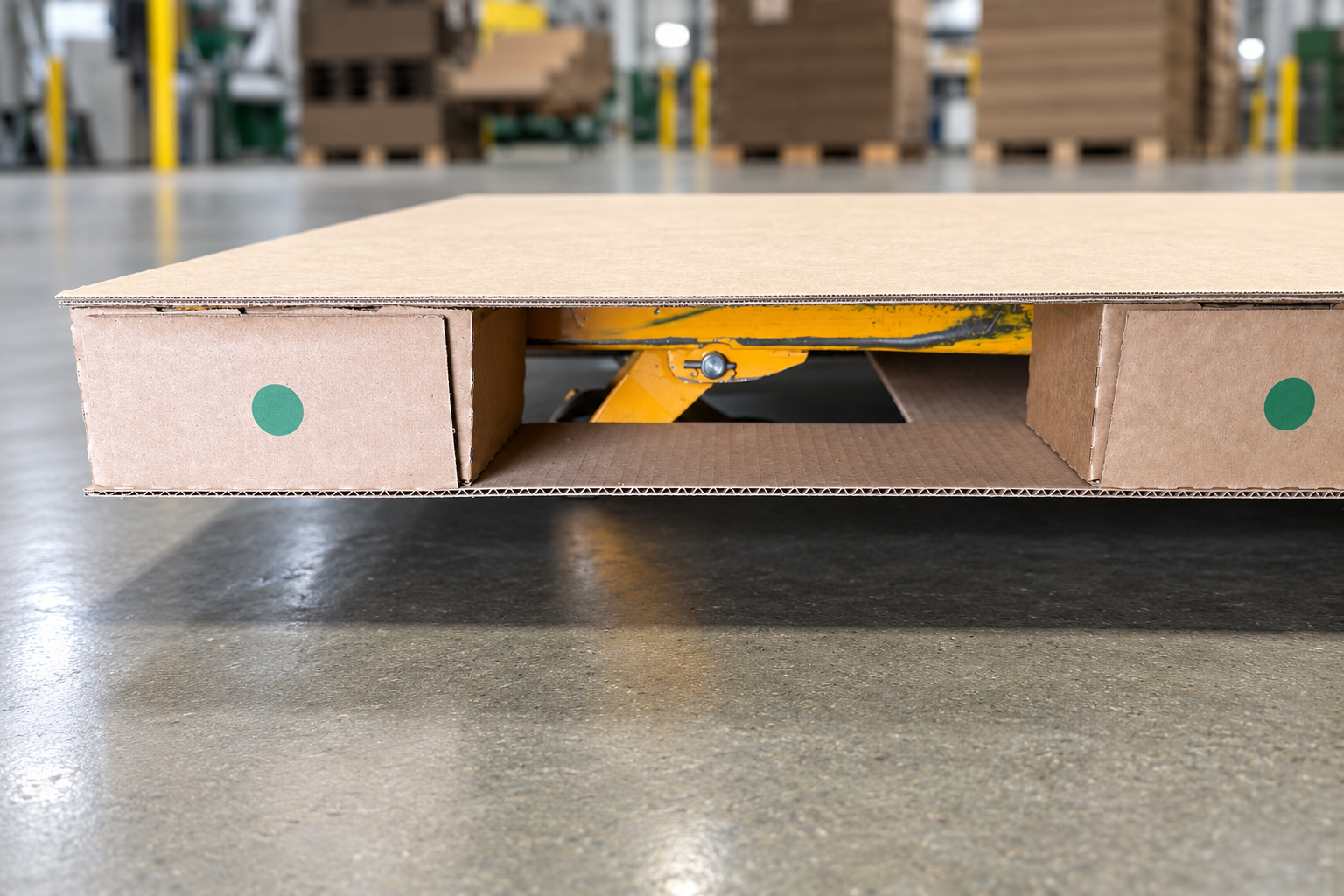
Corrugated pallets can be designed for pallet-jack use.
That requires more than simply leaving enough space for the pallet-jack forks to enter. As a pallet jack lifts the load, its load wheels must also travel through the bottom of the pallet and reach the floor.
Ecodek pallets can be designed with die-cut or otherwise configured bottom openings that provide the necessary path for those wheels.
A pallet-jack-accessible design considers:
- fork entry
- load-wheel location
- bottom-deck openings
- support placement
- structural requirements around those openings
The result is a corrugated pallet designed around the actual mechanics of pallet-jack handling.
Designed Around the Load ▾
Where the weight is located can matter just as much as how much the product weighs.
A large carton covering most of the pallet deck may distribute its weight across a broad area. A machine of the same total weight may transfer nearly all of that weight through four small feet.
Those are completely different structural conditions.
Ecodek pallets can be designed around:
- broad distributed loads
- concentrated point loads
- machinery
- drums
- bulk containers
- cartons
- assemblies
- products with irregular footprints
Supports can be positioned where the load actually requires them rather than simply following one standard pallet pattern.
Designed Around the Handling Equipment ▾
The pallet has to work with more than the product sitting on top of it.
The way a pallet is lifted, moved, stored, conveyed, and delivered can influence its construction.
Handling considerations may include:
- forklifts
- pallet jacks
- conveyors
- automated handling systems
- warehouse racks
- trailers
- shipping containers
- customer production equipment
Fork spacing, entry direction, bottom openings, clearances, and support placement can all be affected by the equipment that will interact with the pallet.
A pallet that supports the product but does not work with the customer's handling system is still the wrong pallet.
Concentrated Loads vs. Distributed Loads ▾
Total pallet weight capacity does not tell the entire story.
Distributed Loads
A distributed load spreads weight across a larger portion of the pallet deck.
Examples may include:
- large cartons
- bulk containers
- products with broad bases
Because the weight is spread over a larger area, the deck can distribute that force across multiple supports.
Concentrated Loads
A concentrated load places significant weight into a much smaller portion of the pallet.
Examples may include:
- machine feet
- narrow skids
- drums
- equipment frames
- heavy components with small contact areas
These applications may require additional structure directly beneath the concentrated load.
Two different products with the same total weight can therefore require very different pallet designs.
The Bottom of the Pallet Matters Too ▾
It is easy to focus on the top deck because that is where the product sits, but the bottom construction can be just as important.
Depending on the application, the bottom deck can:
- tie the support structure together
- increase pallet stiffness
- help distribute forces
- provide a stable handling surface
- create pallet-jack access
- interact with conveyors
- influence floor or rack contact
Bottom construction is part of the complete pallet design, not an afterthought.
Blocks, Runners, and Support Patterns ▾
Corrugated pallets do not all use the same support system.
Some designs use individual blocks. Others use runners or longer support structures. The appropriate arrangement depends on the load, deck span, handling direction, and the way forces move through the pallet.
Support placement can also be changed to:
- place structure directly beneath concentrated loads
- reduce unsupported deck spans
- accommodate fork entry
- provide pallet-jack clearance
- avoid interference with handling equipment
- work around the footprint of the product
This flexibility allows pallets with similar overall dimensions to be built very differently on the inside.
Reinforcement for High-Tension Strapping ▾
Ecodek Edge Protection uses small pieces of paperboard reinforcement placed only where high-tension strapping crosses an unsupported section of the deck edge.
For example, on a block-style pallet, the reinforcement may be added in the open span between supports where a strap travels beneath the pallet and wraps up around the deck edge. The added paperboard strengthens that localized edge area and helps prevent the strap from crushing or cutting into the corrugated deck as tension is applied.
Most applications using high-tension strapping do not require Edge Protection. It is used only where the strap path creates that specific unsupported edge-loading condition.
Material Delamination vs. Bond Failure ▾
These are two different failure modes:
Bond Failure
Bond failure occurs when a block, runner, or other support separates from the pallet decking at the adhesive joint.
Ecodek's PVA adhesive and high-compression bonding process are designed to prevent that type of clean separation. A properly bonded joint normally requires the corrugated fibers themselves to tear before the support can be removed from the decking.
Delamination
Delamination occurs within the corrugated material itself, when layers of the board separate from one another. That is a material issue, not the same thing as a support releasing from an adhesive joint.
GreenLabel Packaging inspects all corrugated materials prior to production, and visible material defects such as delamination can be identified before completed pallets are produced.
Loaded Pallet Stacking ▾
A pallet that performs well as a single unit load may require a different design when loaded pallets are stacked several levels high.
GreenLabel considers not only the weight of one palletized load, but also how the customer stores and stacks loaded pallets. When multiple unit loads are stacked, the pallets and packaging lower in the stack are subjected to substantially greater vertical forces than a single pallet sitting on the floor.
Important factors include:
- number of loaded pallets stacked high
- weight of each unit load
- product and carton footprint
- alignment of the stacked loads
- how the load is transferred through the packaging
- length of time the pallets remain stacked
- stability and stiffness of the packaged product
For example, a broad, evenly distributed 500-pound load may be relatively straightforward when handled individually. If those same loaded pallets are routinely stacked six high, the application presents a very different structural requirement.
Stacking conditions are part of the pallet design, not an afterthought.
Designed for the Application,
Not Pulled From a Catalog
Every Ecodek pallet is built around your product, performance requirements, and supply chain. We work with you to design a solution that makes sense for your specific needs - not a one-size-fits-all pallet.
Key factors we consider include:
Product dimensions
Total palletized weight
Weight distribution
Forklift & pallet-jack use
Carton or container dimensions
Conveyor or automation setup
Loaded pallet stacking needs
Storage or rack conditions
Shipping method
Target price / cost requirements
Frequently Asked Questions
Pallet Design & Construction FAQ
Are all corrugated pallets constructed the same way?
No.
Corrugated pallets can vary significantly in material grade, deck construction, support type, support placement, adhesive system, fork entry, and bottom configuration.
Two pallets with the same outside dimensions may perform very differently depending on how they are built.
How are Ecodek pallet components bonded together?
GreenLabel uses a water-based PVA adhesive and sets the bonded components under high compression.
The adhesive penetrates into the corrugated fibers instead of simply sitting on the surface. A properly bonded joint is typically difficult to separate without tearing the corrugated material itself.
Why does GreenLabel use PVA adhesive instead of hot-melt glue?
PVA adhesive penetrates into the corrugated fibers and creates a strong fiber-to-fiber bond.
Some corrugated pallets are assembled with hot-melt adhesive, which can release more readily from the paper surface under peeling forces.
For a structural pallet joint, GreenLabel wants the corrugated material to tear before the adhesive joint simply releases.
Can corrugated pallet blocks or runners come loose?
They can if the pallet is poorly bonded or if the construction is not appropriate for the application.
GreenLabel uses PVA adhesive and high compression to create a strong bond between the blocks or runners and the pallet decking.
I tried corrugated pallets before and the supports came off. Does that mean corrugated pallets do not work?
If blocks or runners pulled away from the decking, the issue may have been the bonding system or pallet construction rather than corrugated pallets as a product category.
Not all corrugated pallets are built the same way.
What is the difference between a block and a runner?
Blocks are individual support elements positioned beneath the pallet deck.
Runners are longer support structures that extend across a greater portion of the pallet.
The pallet may use blocks, runners, or another support arrangement depending on the load and handling requirements.
Can corrugated pallets be made in standard 48 × 40 dimensions?
Yes.
Ecodek pallets can be designed in common footprints such as 48 × 40 inches as well as application-specific dimensions.
The footprint is only the starting point. The internal construction still has to be designed around the product, load, and handling requirements.
Can a corrugated pallet work with a pallet jack?
Yes, when the pallet is designed for it.
The pallet needs room not only for the pallet-jack forks but also for the load wheels to travel through the bottom construction and reach the floor.
Ecodek pallets can be designed with die-cut or open-bottom configurations that provide the required wheel access.
What is an open-bottom corrugated pallet?
An open-bottom pallet uses blocks or other supports without a continuous bottom deck.
A common nine-block design using 6 × 8-inch blocks provides approximately three square feet of total block-to-deck bonding area and the same approximate amount of bearing surface beneath the pallet.
When the application allows it, an open-bottom design can reduce material, improve pallet-jack access, and allow pallets to nest more efficiently for shipping and storage.
Can open-bottom pallets be nested?
es, many open-bottom designs can be nested by alternating pallets upright and upside down in the stack.
Because the blocks fit into the open spaces of the adjacent pallet, the stack becomes much more compact.
For common pallet sizes, nesting can allow more than 40% more pallets per truck, depending on the design and trailer configuration. It can also reduce the amount of storage space required before the pallets are used.
Can corrugated pallets have forklift entry from multiple directions?
Yes.
Fork-entry configuration can be designed around the required handling pattern, provided the structure of the pallet and the product allow it.
Entry direction, opening size, and support placement are considered as part of the overall pallet design.
Can corrugated pallets run on conveyors?
They can be designed for many conveyor applications, but the conveyor support pattern matters.
The bottom configuration, support placement, contact surfaces, and conveyor type all need to be considered.
Systems that leave large areas of the pallet unsupported may not be appropriate for corrugated pallets.
How do concentrated loads affect pallet design?
Concentrated loads put significant force into relatively small areas of the pallet.
A machine supported on several small feet, for example, may require structure directly beneath those locations.
A broad carton of the same total weight may distribute its load much more evenly.
That is why total weight alone does not determine whether a pallet design will work.
What determines how many blocks or supports a pallet needs?
Support quantity and placement depend on the application.
Factors can include:
- pallet dimensions
- product footprint
- total weight
- weight distribution
- concentrated load points
- deck construction
- handling equipment
- unsupported spans
- stacking requirements
The correct number and location of supports are determined by how the pallet will actually be used.
Can loaded corrugated pallets be stacked?
Yes, when the pallet and unit load are designed for the actual stacking conditions.
A pallet that performs well as a single unit load may require different construction when loaded pallets are stacked several levels high.
GreenLabel considers the weight of each load, product and carton footprint, load alignment, packaging strength, and how many loaded pallets will be stacked.
A relatively easy 500-pound load can become a very different structural requirement when loaded pallets are stacked six high.
Is heavier corrugated always better?
No.
Using heavier material can increase strength, but simply adding more material is not the same as designing a better pallet.
Material grade, deck construction, support placement, adhesive bonding, bottom configuration, and load distribution all work together.
The goal is to use the appropriate construction for the application rather than simply making every component heavier.
Does GreenLabel use single-wall, double-wall, or triple-wall corrugated?
All three.
Ecodek pallets can incorporate single-wall, double-wall, and triple-wall corrugated depending on the application and the function of the component.
Double-wall and triple-wall materials are commonly used where greater structural strength or stiffness is required, particularly in decking. Single-wall is frequently used for bottom decks and can also be used for top decks in applications where the required performance can be achieved with a strong single-wall construction.
Material selection is one part of the complete pallet design.
Can the top deck and bottom deck use different corrugated constructions?
Yes.
There is no requirement that every component of the pallet use the same corrugated grade.
For example, an application may use a heavier top deck with a lighter single-wall bottom deck, depending on the load and handling requirements.
The material used in each part of the pallet is selected based on the job that component needs to perform.
What is the difference between bond failure and corrugated delamination?
They are different failure modes.
Bond failure occurs when a block, runner, or other support separates from the decking at the adhesive joint.
Delamination occurs within the corrugated board itself when layers of the material separate.
GreenLabel’s PVA bonding process is designed to create a joint that is difficult to separate without tearing the corrugated fibers. Material defects such as visible delamination can also be identified during production before completed pallets are shipped.
Can GreenLabel design around an existing wood pallet footprint?
Often, yes.
The existing pallet dimensions and handling requirements can provide a useful starting point.
However, the corrugated pallet still needs to be designed around the actual product, load distribution, handling equipment, stacking requirements, and storage conditions rather than simply copying the wood pallet construction.
Can a corrugated pallet be designed around unusual equipment or handling requirements?
Yes.
Fork-entry locations, support placement, bottom construction, pallet-jack openings, and other details can be adjusted around specific equipment and application requirements.
The handling system should be discussed as part of the pallet design rather than after the pallet has already been developed.
Why do two corrugated pallets with the same dimensions sometimes look completely different?
Because they may be solving completely different problems.
A pallet designed for a broad distributed load may require one structure, while a pallet supporting concentrated equipment, stacked unit loads, pallet-jack handling, or a specific conveyor system may require another.
The outside dimensions tell only part of the story.
What information does GreenLabel consider when designing a corrugated pallet?
GreenLabel considers the conditions of the actual customer application, including:
- product dimensions and footprint
- total palletized weight
- weight distribution and concentrated load points
- carton or container dimensions
- loaded pallet stacking requirements
- forklift and pallet-jack handling
- conveyor or automation requirements
- storage or rack conditions
- shipping method
- target price or cost requirements
Those application requirements determine the pallet construction rather than starting with one standard Ecodek design.
Let's Design the Right Pallet.
Tell us what you’re shipping and we’ll design a corrugated pallet built around your product, your operation, and the way it moves.